
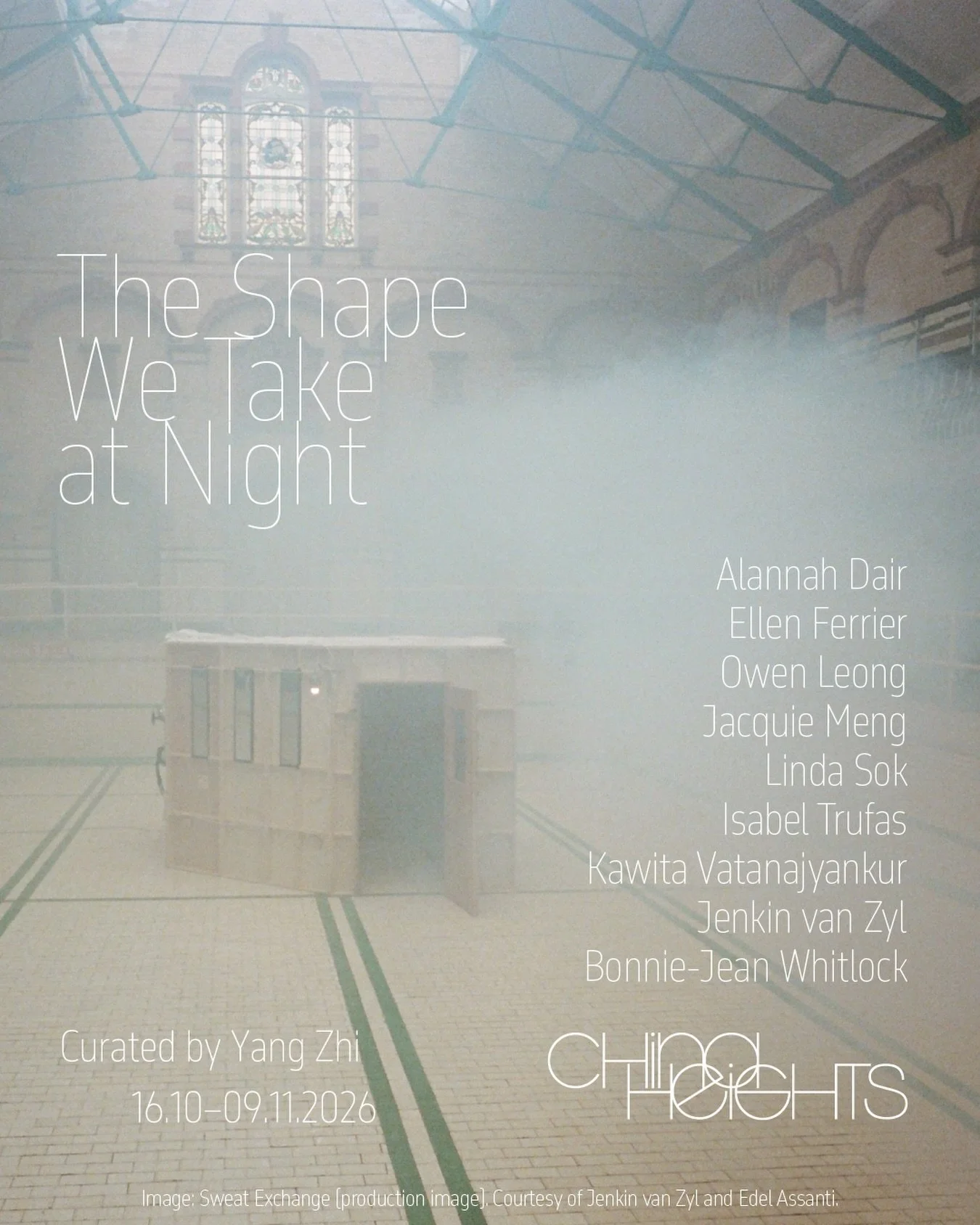
‘The Shape We Take at Night’ Curated by Yang Zhi featuring:
Alannah Dair, Ellen Ferrier, Owen Leong, Jacquie Meng, Linda Sok, Isabel Trufas, Kawita Vatanajyankur, Jenkin van Zyl & Bonnie-Jean Whitlock
Opens 6-8pm Friday 16.10.2026
Continues 12-5pm Wed-Sat until 07.11.2026
More info
At night, the body forgets, for a moment, the shape it has been asked to keep.
Edges soften. A wound becomes an opening. What was buried in the body—pain, memory, desire, an old inheritance—finds its way back to the surface. Perhaps this is what darkness gives us: a chance to encounter ourselves without a clear outline.
The nine artists in The Shape We Take at Night begin somewhere within this uncertainty. Across their works, bodies leak, labour, ache, remember, transform. Alannah Dair gives form to pain that has no easy image. Kawita Vatanajyankur submits her body to cycles of repetition until flesh begins to resemble machine. In Jenkin van Zyl’s feverish universe, sweat is harvested and consumed as bodies split into copies of themselves, exhausted and ecstatic at once.
Some transformations arrive through desire. Owen Leong returns to the fox spirits, ghosts and demons of classical Chinese tales, allowing them to reappear as queer bodies unbound by earthly form. Isabel Trufas finds the body through adornment, softness and excess. In Jacquie Meng’s surreal assemblages, familiar things become strange again, carrying fragments of femininity, migration and cultural memory.
And some bodies are made from what remains.
Linda Sok begins with missing textiles and colonial records, gathering family memory and imagination around the absences left behind. Bonnie-Jean Whitlock presses the body into cloth, where pigment, touch and landscape settle like sediment. Ellen Ferrier works with discarded and organic matter, asking how something abandoned might still return to life in another form.
Nothing here stays entirely itself. Flesh approaches machine. Waste becomes skin. An archive becomes memory. A ghost acquires a body.
Perhaps we are shaped this way too: by everything that has touched us and refused to disappear. By what we inherit. By what we lose. By what the body survives and quietly remembers.
And, somewhere in the dark, by what we are still becoming.
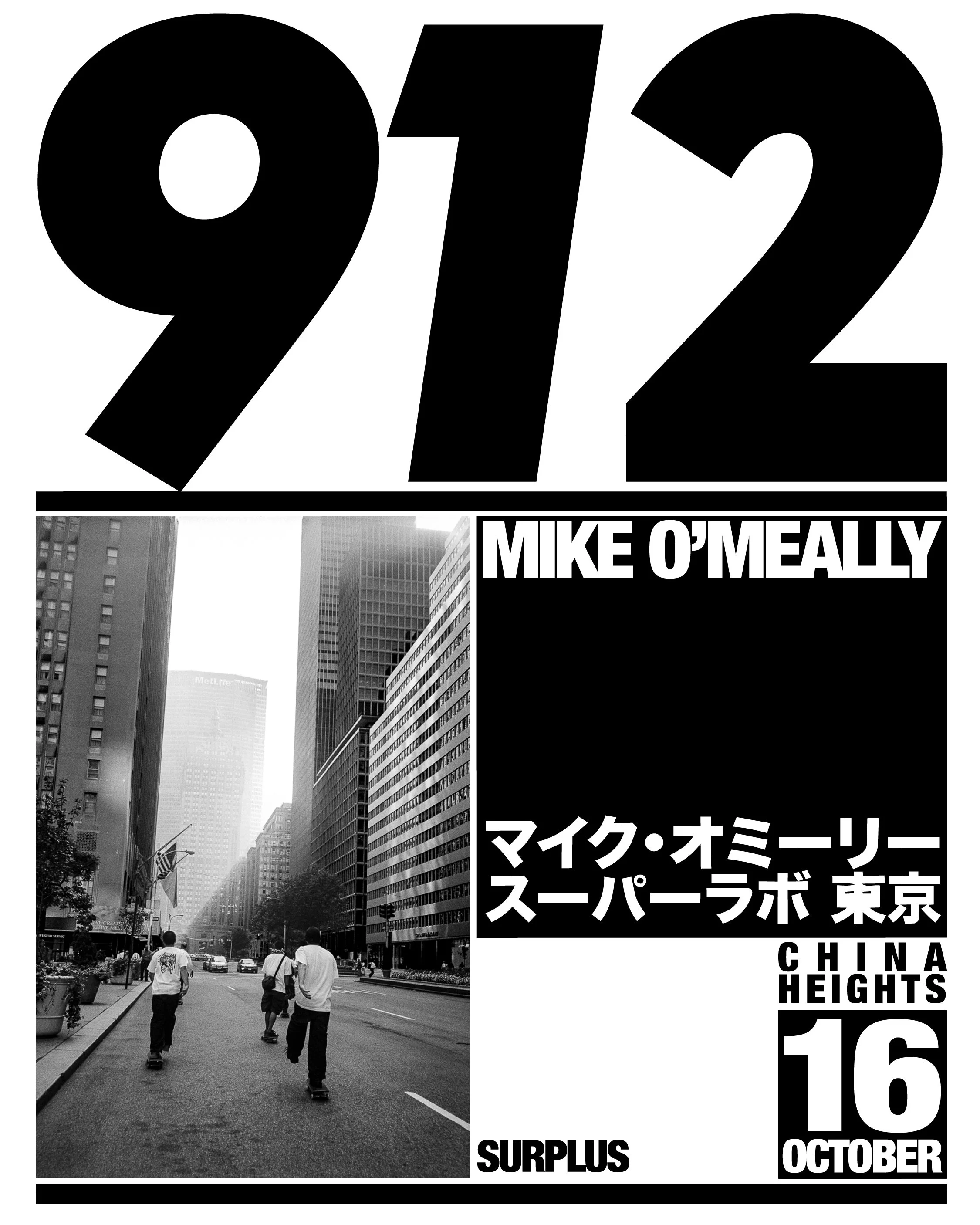
‘9/12’
Mike O’Meally
Open 6-8pm Friday 16.10.26
Saturday 12-5pm 24.10.26
More info
On September 12th, 2001, the day after the Twin Towers were attacked, street photographer Mike O’Meally captured the downtown New York landscape in a state of change. 9/12 features a trove of largely unseen photographs amidst a smoke-filled Lower Manhattan with sirens echoing around the crew. On black-and-white film, O'Meally captures skaters pushing through the streets shaped by loss—but buoyed by defiance in the wake of tragedy. To mark the 25th anniversary of September 11th, 2001, this new publication honors the spirit of New Yorkers who endured unimaginable hardship, yet persevered against all odds.
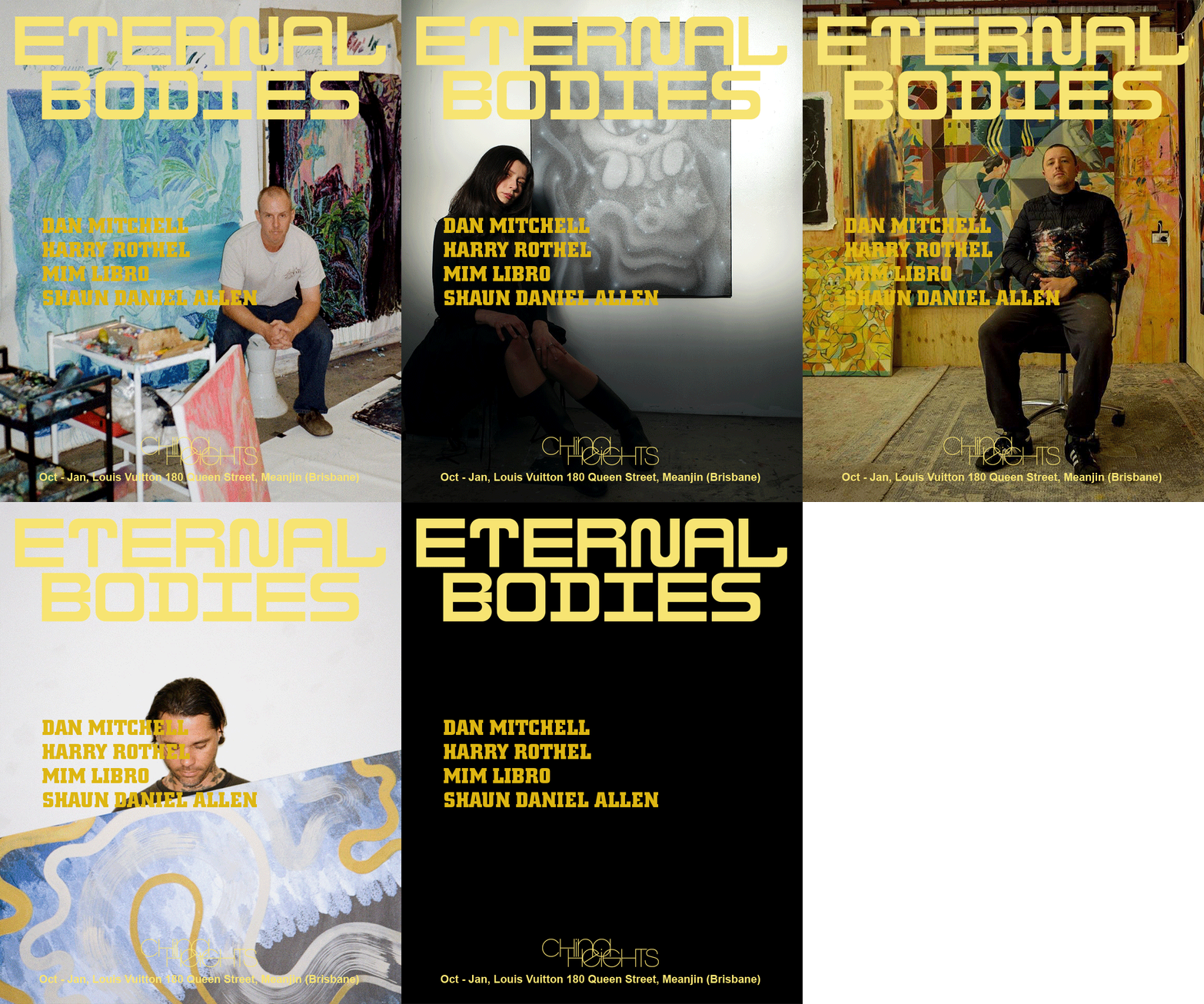
‘Eternal Bodies’
Group exhibition featuring:
Dan Mitchell, Harry Rothel, Mim Libro, Shaun Daniel Allen
Offsite Location - Louis Vuitton, 180 Queen St, Meanjin (Brisbane)
Open 10:30am - 6pm daily until January
More info
When does a body begin? Conception starts with two pre existing components, a loop that continues itself indefinitely. We were always here and will continue on after our bodies seperate from our selves. We physically transition and age throughout the brief span of a lifetime but our eternal bodies are death proof. Religious teachings preach conditional eternal life, but we were here before such doctrines came to be. Our bodies came from something and will end up somewhere, eternally.
Dan Mitchell
Dan Mitchell paints overgrown, swampy interiors. Dense vegetation. Thick air. The light in his work builds its own weather, wet and glowing. These are not landscapes as background. They pull you to the water's edge to see what stirs below. Mitchell creates the climate of this seasonal world. His canvases are the ground everything else sits upon.
Harry Rothel
Harry Rothel directs the human figure like a stage manager with a dark secret. His macabre, extravagant scenes of joy and horror overlapping unfold in soft, muted colours: vivid blues dropping into delicate mauve and pastel. Rothel's imaginative narratives map the human psyche while skewering social convention and contemporary politics. The result is disquieting but never laboured; his acerbic layers of paint move with a modernist's impatience, borrowing from old masters only to cut their line short.
Mim Libro
Mim Libro is an artist working across media whose explorations into a deep inner world emerge through painting, sculpture and design. Originally from the South Coast of Sydney/Eora, Mim now is based in Melbourne/Naarm, where she has developed and carved out her own creative journey and studio practice. Mim transitioned from a background in film and curating visual elements for music events before eventually creating her own artwork. Always seeking her next creative pursuit, what started with screen-printed posters and merch design, quickly evolved into a painting practice that deserted realism and became a conduit for how Mim views and experiences the world.
Shaun Daniel Allen (Shal)
Shaun Daniel Allen (Shal), a Yugambeh-born Bundjalung artist, has quickly risen to prominence with his bold, lyrical paintings that bridge cultural worlds. His debut solo show, Balun (2021), introduced his distinctive visual language and connection to Yugambeh Country, earning institutional recognition including commissions for the Art Gallery of NSW, Powerhouse Museum, and Museum of Contemporary Art.